 FR
FR
 EN
EN

Dance
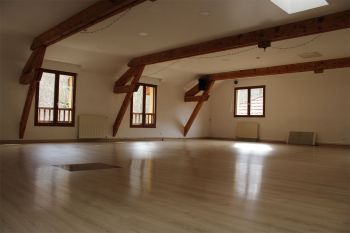
The balroom
Blues
Blues dance is inseparable from blues music. With roots in African traditions, the dance emerged in the 1920s. Over the decades, the dance has evolved, incorporating elements of jazz, rock ‘n’ roll, and other dance styles. But it remains an important part of African-American culture. Depending on the style (idiom), it can be characterized by slow, fluid, sensual movements. Dancers focus on personal expression and interpreting the emotions conveyed by the music. It can be danced as a couple (but also solo), with an emphasis on the connection between partners. It is a very rich dance, featuring movements, sways, waves, drops, and variations in rhythm.
Fusion
Fusion dance is a world in which everyone is free to express themselves through movement, regardless of their dance background and experience. Unlike more "codified" dances, fusion has relatively few technical limitations, for example there are no basic steps or predetermined passes. The movements are free, inspired or not by other dances, primarily driven by feeling, inspiration, connection with partners and music. Often danced in pairs in the configuration of a couple dance, it can also be danced solo, in threes, ... The principle of fusion is to create, to explore and to share on the music.
Among the dances that can inspire the world of fusion are blues, tango, west coast swing, Brazilian zouk, kizomba, forró, trad, contact dance, solo dances...
Micro
Micro dance is a based on the practice of small, often subtle movements. Breathing and isolations are tools that can be used in the experimentation of this dance.
It allows to focus on the listening of the music, one' s own movement and that of the partners. The subtlety of the movements provides the opportunity to develop intense connections and amplified sensations.
It is difficult to describe this world in words or even to capture it in images. To truly discover it... come and experience it at TOM!